In modern automotive and metal stamping plants, achieving consistent forming accuracy is no longer optional—it is a fundamental requirement for dimensional stability, assembly precision, and long-term product reliability. As vehicle platforms evolve toward lighter structures and higher-strength alloys, the challenge of maintaining formability increases significantly. This is where the draw die spotting process becomes a central tool for ensuring forming quality.
For manufacturers focused on reliability and repeatability, understanding how this process works—and why it matters—helps elevate tooling performance across the entire stamping line.
Metal forming in the automotive sector demands extremely tight tolerances. Body-in-white components, reinforcement brackets, and structural stampings must all fit perfectly during downstream assembly. Any mismatch, wrinkle, or thinning variation leads to:
Reduced part consistency
Higher scrap rates
Unpredictable springback
Increased tool wear
Costly downtime for adjustments
The draw die spotting process is the technique that corrects these conditions before they escalate. By precisely identifying and adjusting contact conditions between upper and lower dies, spotting ensures the forming surfaces match design intent and function harmoniously under load.
In industries moving rapidly toward EVs, ultra-high-strength steels, and lightweight composite metal designs, the ability to control micro-level contact areas is what separates stable production from chronic forming variation.
At its core, the draw die spotting process is a controlled procedure used to validate and tune the interface between die halves. It typically includes:
Surface Blueing or Coating
A transfer medium—such as spotting ink or bluing compound—is applied to one die half to reveal actual contact points.
Sequential Closing and Load Application
The press closes the die to simulated production load, making real mating surfaces visible.
Inspection and Measurement
Technicians inspect high spots, low areas, or misaligned profiles.
Selective Material Removal or Polishing
High-contact zones are manually or CNC-machined to achieve even distribution.
Repetition Until Uniform Contact Is Achieved
Multiple cycles refine die-to-die matching until it meets forming standards.
Though simple in concept, this process requires skilled technicians and a deep understanding of material flow behavior under actual stamping conditions.
Uneven die contact can cause tearing, galling, and wrinkling during deep drawing. By fine-tuning the die engagement profile, the draw die spotting process distributes forming forces uniformly, reducing stress concentrations and improving part integrity.
Proper spotting ensures material flows as expected from blank center to periphery. Variations of just 0.1–0.2 mm in die clearance can determine whether a part draws smoothly or fails prematurely.
Springback becomes more unpredictable as materials reach 600–1500 MPa tensile strengths. Die spotting helps designers and toolmakers achieve consistent restraining forces, improving post-forming dimensional stability.
A well-spotted die reaches stable production parameters faster. Fewer unplanned stoppages mean smoother workflows, higher equipment availability, and improved cost control.
The draw die spotting process is used throughout multiple tool categories:
| Die Type | Role in Stamping Line | How Spotting Improves Output |
|---|---|---|
| Draw Dies | Primary forming | Ensures smooth material flow and prevents tearing |
| Trim Dies | Edge finishing | Aligns cutting surfaces for clean, burr-free trims |
| Flange Dies | Bending & shaping | Ensures even flange angles and reduces distortion |
| Progressive Dies | High-speed stamping | Minimizes wear and maintains part-to-part consistency |
For automotive OEMs and Tier-1 suppliers, consistent application of spotting across die sets ensures that each forming stage supports the next, enabling stable mass production.
At BulkTEK, our experience in draw-forming technology and die development allows us to deliver tooling solutions built for long-term reliability. Our engineering philosophy emphasizes three core areas where the draw die spotting process plays a vital role:
We use high-stability tool steels, optimized heat treatment cycles, and controlled polishing methods to ensure the die surfaces respond predictably during spotting adjustments.
Spotting is performed under pressure settings that mirror real production environments. This ensures that die contact patterns observed during spotting translate accurately to the stamping line.
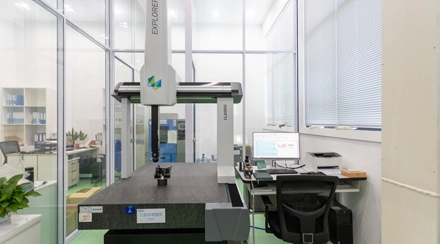
Digital measurement, 3D scanning, and contact mapping allow our engineers to quantify the effectiveness of each spotting cycle. This minimizes trial-and-error, speeds up die readiness, and helps maintain reproducible forming quality.
The more accurately the die is spotted, the lower the scrap rate and the fewer parts require rework.
Balanced pressure reduces wear and prevents early tool damage.
Parts maintain consistent shape, helping downstream welding and assembly operations run smoothly.
Well-prepared dies shorten production ramp-up time and reduce the number of press trials needed.
As OEMs shift to AHSS and aluminum alloy components, spotting becomes essential for managing material flow.
The draw die spotting process is not merely a finishing step in die preparation—it is a critical factor that influences forming quality, production efficiency, and the long-term economics of stamping operations. For automotive and metal stamping manufacturers aiming for precision and repeatability, investing in a disciplined spotting workflow is one of the most effective ways to maintain forming excellence.
Whether producing structural components, outer panels, or small precision stampings, a well-spotted die ensures that every forming cycle operates within controlled parameters. At BulkTEK, we integrate advanced tooling technologies with meticulous spotting practices to help manufacturers achieve stable, high-quality production across diverse stamping applications.
 English