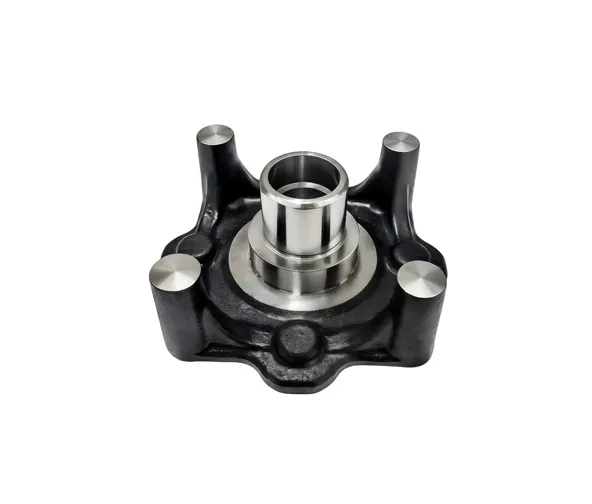
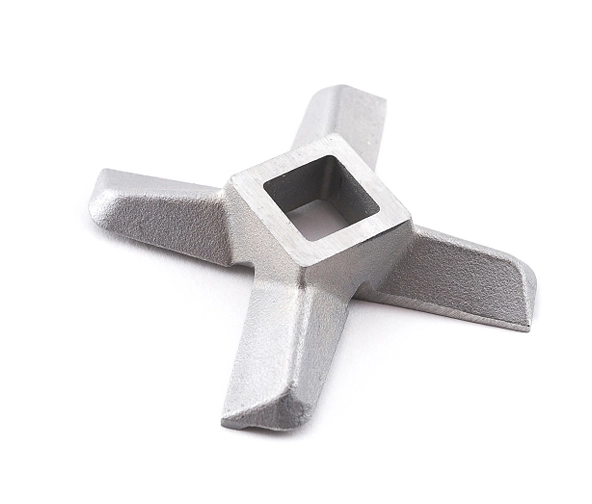
In modern manufacturing, metal casting remains one of the most essential production methods for creating complex, durable, and cost-effective components. Among the most widely used techniques are precision casting and sand casting. Although both processes are used to produce metal parts, they differ significantly in accuracy, cost structure, material capability, and production efficiency.
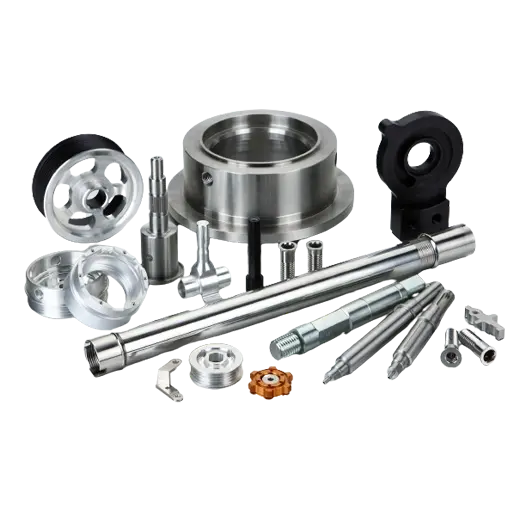
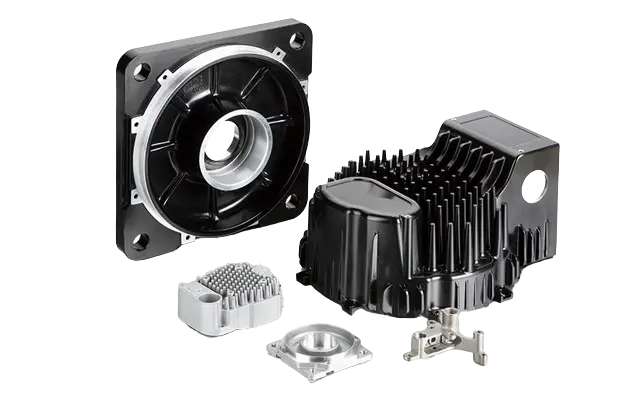
Precision castings refer to metal parts produced using highly accurate casting methods such as investment casting (lost-wax process). These processes are designed to achieve tight tolerances, smooth surface finishes, and complex geometries that require minimal machining.
In a typical precision casting process, a wax model of the part is created, coated with ceramic material, and then melted away to form a cavity. Molten metal is then poured into this mold, producing a near-net-shape component.
Precision castings are widely used in industries requiring high accuracy, such as:
Aerospace components
Medical instruments
Automotive precision parts
Industrial machinery
For high-quality sourcing, a precision casting manufacturer like BulkTEK provides engineered solutions tailored for complex and high-performance applications.
Sand casting is one of the oldest and most versatile metal casting methods. It involves creating a mold from sand and then pouring molten metal into the cavity. Once cooled, the sand mold is broken away to reveal the final part.
The sand casting process typically includes:
Pattern creation (wood, metal, or plastic)
Mold preparation using sand and binders
Core placement (if internal cavities are required)
Metal pouring
Cooling and solidification
Shakeout and finishing
Sand casting is widely used due to its flexibility, low cost, and ability to produce large components. Industries such as construction, automotive, and heavy machinery heavily rely on this method.
Reliable sand casting suppliers like BulkTEK provide scalable production capabilities for both prototyping and mass manufacturing.
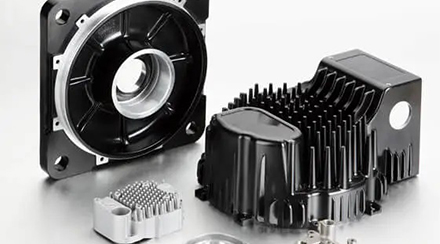
The sand casting process is valued for its simplicity and adaptability. Below are its core stages:
Pattern Making: A replica of the final part is created.
Molding: Sand mixed with clay and binders is packed around the pattern.
Core Setting: Used to form internal cavities if needed.
Pouring: Molten metal is poured into the mold cavity.
Cooling: Metal solidifies inside the mold.
Finishing: Excess material is removed, and surface treatment is applied.
Because sand molds are disposable, this process is ideal for low-to-medium precision requirements and large-scale or heavy parts.
The precision casting processes involve more advanced steps:
Wax pattern injection
Assembly of wax trees
Ceramic shell coating
Dewaxing (lost wax removal)
High-temperature firing
Metal pouring under controlled conditions
Shell removal and finishing
This method ensures:
Excellent dimensional accuracy
Smooth surface finish
Reduced machining requirements
High repeatability
However, it typically involves higher costs and longer production cycles compared to sand casting.
| Feature | Precision Casting | Sand Casting |
|---|---|---|
| Accuracy | Very high (tight tolerances) | Moderate |
| Surface Finish | Smooth, minimal post-processing | Rough, requires finishing |
| Cost | Higher initial cost | Lower cost |
| Complexity | Excellent for complex geometries | Limited by mold structure |
| Production Volume | Medium to high | Low to very high |
| Lead Time | Longer setup time | Faster setup |
| Material Efficiency | High | Moderate |
| Part Size Capability | Small to medium | Small to very large |
This comparison highlights that both methods serve different engineering and economic needs rather than competing directly.
Choosing between precision casting and sand casting depends on application requirements.
High dimensional accuracy is required
Surface finish is critical
Parts have complex internal geometries
Minimal machining is desired
You are producing high-value components
Industries like aerospace and medical devices often rely on precision castings due to strict performance requirements.
Large parts are needed
Cost efficiency is a priority
Design changes are frequent
Production volume is flexible
Surface finish is not critical
Many industrial buyers work with sand casting suppliers like BulkTEK to balance cost and scalability effectively.
Precision castings support a wide range of materials, including stainless steel, carbon steel, aluminum alloys, cobalt alloys, and nickel-based superalloys. These materials are selected based on performance requirements such as corrosion resistance, heat resistance, and mechanical strength.
Yes, but with differences. Precision casting processes are specifically designed for highly complex geometries with fine details. Sand casting can handle moderate complexity but may struggle with intricate internal structures.
The sand casting process is compatible with a wide variety of metals, including cast iron, steel, aluminum, brass, and bronze. This versatility makes it suitable for heavy industrial applications.
Both precision casting vs sand casting represent essential technologies in modern manufacturing. Rather than competing, they complement each other across different industries and product requirements.
Precision casting excels in accuracy, surface finish, and complex geometry
Sand casting excels in scalability, cost efficiency, and large part production
Working with experienced partners such as a precision casting manufacturer like BulkTEK or trusted sand casting suppliers like BulkTEK ensures better material selection, process optimization, and consistent product quality.
 English