In modern manufacturing, calendering plays a critical role in producing high-performance sheets, films, and coated materials. Whether in plastics, rubber, or textiles, the calendering process enables precise thickness control, smooth surface finishing, and consistent material properties at scale.
This guide delivers a comprehensive, industry-level explanation of calendering, covering its process, types, advantages, and how to choose the right solution—while integrating real-world industrial insights aligned with BulkTek’s calendering solutions.
Calendering is a mechanical finishing and forming process in which material is passed through a series of heated rollers to achieve a desired thickness, surface finish, and structural uniformity.
It is widely used in industries such as:
Plastics manufacturing
Rubber processing
Textile finishing
Paper and packaging
The process transforms raw or semi-processed materials into high-quality sheets or films with tight tolerances and enhanced surface properties.
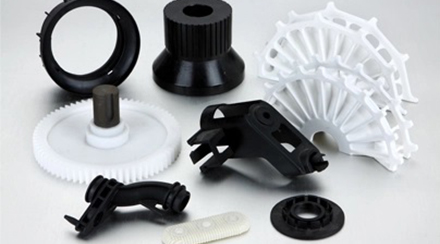
The calendering process involves multiple controlled steps to ensure precision and consistency.
| Step | Description | Key Control Factors |
|---|---|---|
| Material Preparation | Raw material is mixed and preheated | Temperature, viscosity |
| Feeding | Material is fed into calender rolls | Feed rate |
| Rolling | Material passes through multiple rollers | Pressure, roll gap |
| Thickness Control | Gap between rollers defines thickness | Precision calibration |
| Cooling | Material is cooled to stabilize structure | Cooling rate |
| Winding/Cutting | Final product is rolled or cut | Tension control |
Roll temperature
Pressure between rollers
Speed synchronization
Material viscosity
BulkTek’s calendering systems emphasize automation, precision control, and energy efficiency, ensuring consistent output even in high-volume production environments.
Although calendering has multiple industrial variations, the two most important types are:
Plastic calendering is used to produce films and sheets from thermoplastic materials, especially PVC.
PVC films
Artificial leather
Flooring materials
Packaging films
High surface smoothness
Uniform thickness
Ability to embed textures or patterns
Excellent dimensional control
High production efficiency
Suitable for mass manufacturing
Rubber calendering is used to produce rubber sheets or coated fabrics, often in tire and industrial applications.
Tire manufacturing (ply layers)
Conveyor belts
Rubber-coated textiles
Sealing materials
Strong adhesion properties
Flexible thickness adjustment
Reinforcement layering capability
Improved material strength
Uniform coating distribution
Enhanced durability
Calendering offers several industrial and economic advantages:
Ensures consistent thickness and surface quality, critical for high-performance materials.
Produces smooth, glossy, or textured surfaces depending on roller design.
Ideal for continuous, large-scale production.
Works with plastics, rubber, textiles, and composites.
Reduces material waste and improves production speed.
Allows for:
Embossing patterns
Layering materials
Adjusting mechanical properties
Calendering is used across multiple sectors:
| Industry | Application |
|---|---|
| Plastics | PVC sheets, films |
| Automotive | Tire components, rubber layers |
| Textile | Coated fabrics |
| Packaging | Flexible films |
| Construction | Flooring and wall coverings |
BulkTek’s calendering solutions are particularly suited for industrial-scale production lines, where consistency and efficiency are critical.
The principle of calendering is based on controlled compression and flow of material under heat and pressure.
As material passes through rollers:
Heat softens the material
pressure shapes it
gaps determine thickness
Friction and flow align material structure
This ensures:
Uniform thickness
Improved surface characteristics
Enhanced mechanical properties
| Feature | Plastic Calendering | Rubber Calendering |
|---|---|---|
| Material Type | Thermoplastics | Elastomers |
| Typical Products | Films, sheets | Coated fabrics, tire layers |
| Surface Finish | Smooth or embossed | Functional coatings |
| Flexibility | Moderate | High |
| Industrial Use | Packaging, flooring | Automotive, industrial |
The purpose of calendering is to produce uniform sheets or films with controlled thickness and surface quality, while improving material properties such as strength and flexibility.
To choose the right calendering solution, consider the material type, desired product properties, production scale, and equipment performance. Partnering with an experienced supplier like BulkTek can help ensure better efficiency, consistency, and overall product quality.
The principle is based on heat and pressure applied through rollers to shape and refine material into a uniform structure.
Calendering remains one of the most efficient and versatile manufacturing processes for producing high-quality sheets and films. From plastic calendering to rubber calendering, its applications span across critical industries.
By understanding the calendering process, principles, and types, businesses can make better decisions and optimize production efficiency.
With advanced solutions from BulkTek, manufacturers can achieve:
Higher precision
Greater consistency
Improved production efficiency
 English