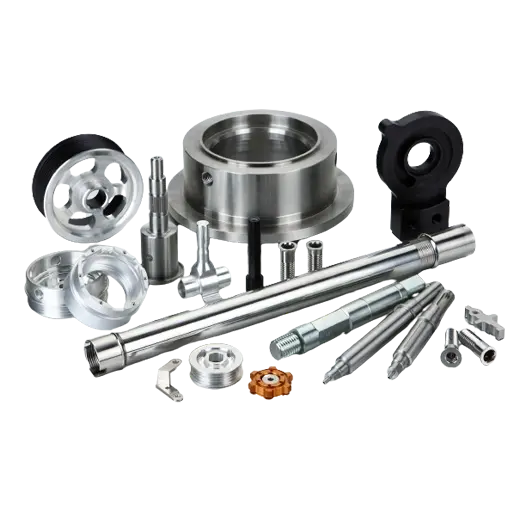
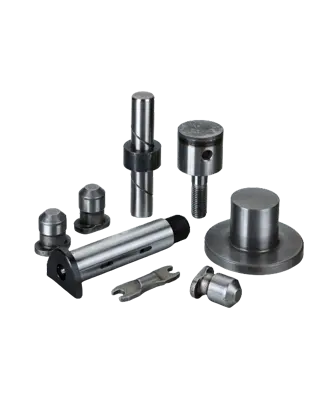
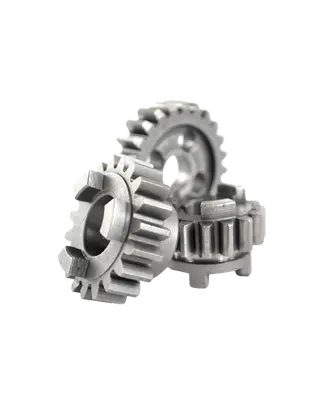
Metal casting remains one of the most important manufacturing methods in modern industry. From automotive parts and industrial machinery to aerospace components and agricultural equipment, casting processes make it possible to create complex metal parts efficiently and at scale.
Among the many casting methods available today, sand casting and die casting are two of the most widely used. While both processes involve pouring molten metal into a mold, their manufacturing techniques, production capabilities, costs, and applications are very different.
Choosing the right process can significantly impact product quality, lead time, tooling investment, and overall production cost. In this guide, we will explore the differences between sand casting and die casting, their advantages and disadvantages, and how to select the best option for your project.
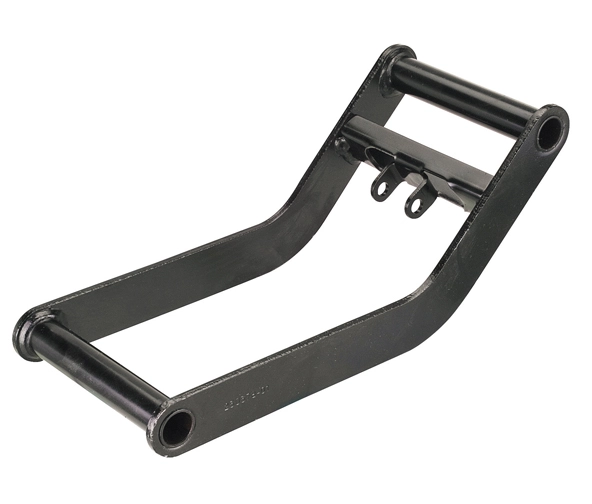
Sand casting is a traditional metal casting process that uses sand-based molds to produce metal parts. The process begins by creating a pattern of the desired component. The pattern is then packed into specially prepared sand to form a mold cavity. Molten metal is poured into the cavity, allowed to cool, and the sand mold is broken away to reveal the finished casting.
Because the mold is destroyed after each use, sand casting is known as an expendable mold casting process.
The basic sand casting process includes the following steps:
Pattern creation
Mold preparation using sand mixtures
Core making (if internal cavities are needed)
Molten metal pouring
Cooling and solidification
Shakeout and mold removal
Finishing and machining
Lower Tooling Costs
Sand casting molds are inexpensive compared to permanent metal dies, making the process ideal for prototypes and low-volume production.
Suitable for Large Parts
Sand casting can manufacture extremely large components that would be impractical or too expensive for die casting.
Wide Material Compatibility
The process supports a broad range of metals, including:
Cast iron
Steel
Aluminum
Brass
Bronze
Magnesium
Flexible Design Capability
Complex geometries and internal cavities can be created relatively easily using cores.
Faster Design Changes
Pattern modifications are simpler and more affordable than redesigning die-casting dies.
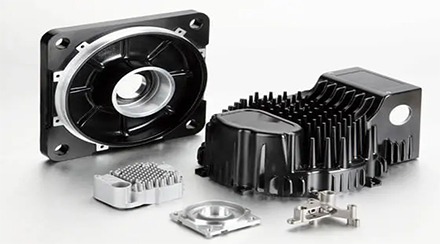
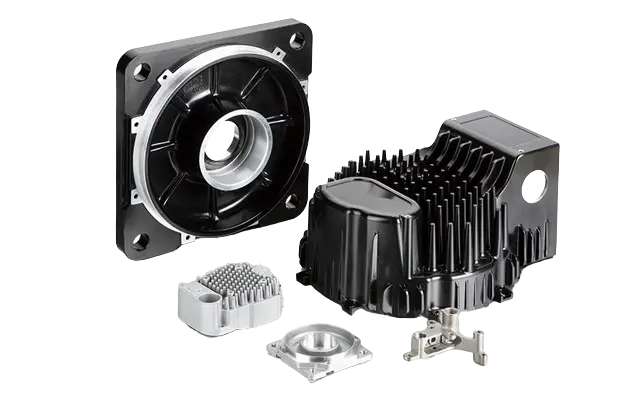
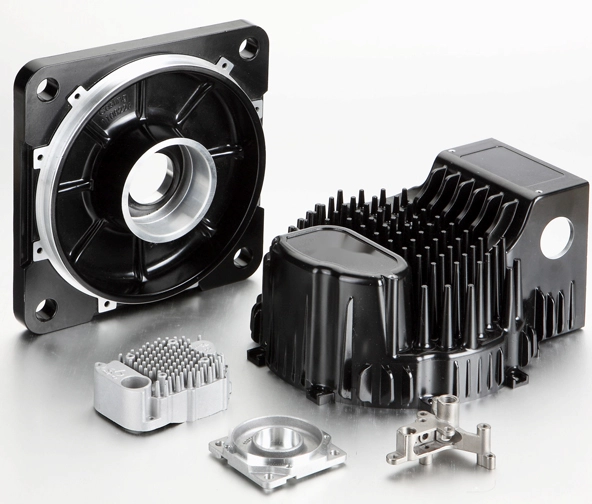
Die casting is a high-pressure metal casting process where molten metal is injected into a hardened steel mold called a die. The metal solidifies rapidly under pressure, creating highly accurate and smooth-surfaced parts.
Unlike sand casting, die casting uses reusable metal molds, making it highly efficient for mass production.
The die casting process generally includes:
Die preparation and lubrication
Molten metal injection under pressure
Rapid cooling inside the die
Die opening and part ejection
Trimming and finishing
Excellent Surface Finish
Die-cast parts typically require minimal finishing operations.
High Dimensional Accuracy
Tight tolerances can be achieved consistently.
Fast Production Speed
Die casting is ideal for high-volume manufacturing.
Thin Wall Capability
Complex thin-wall designs are easier to produce.High Repeatability
The process ensures consistent quality across large production runs.
Choosing between sand casting and die casting depends on several important factors.
| Factor | Sand Casting | Die Casting |
|---|---|---|
| Mold Material | Sand mold | Hardened steel die |
| Tooling Cost | Low | High |
| Production Volume | Low to medium | High volume |
| Surface Finish | Rougher | Smooth |
| Dimensional Accuracy | Moderate | High |
| Part Size | Very large parts possible | Limited by machine size |
| Material Options | Wide variety | Mostly non-ferrous metals |
| Lead Time | Shorter setup | Longer die development |
| Production Speed | Slower | Faster |
| Post Processing | More machining required | Minimal finishing |
There is no universal “better” process. The right choice depends on your production goals.
Low tooling cost
Large metal parts
Small or medium production runs
Broad material flexibility
Faster design modifications
High-volume production
Excellent surface finish
Tight dimensional tolerances
Fast cycle times
Lightweight precision parts
In many industrial applications, manufacturers use both processes depending on the product requirements.
Before selecting a casting method, evaluate the following:
High-volume projects often favor die casting.
Sand casting offers lower startup investment.
Certain metals are better suited to specific processes.
Precision parts usually benefit from die casting.
Large components are often more economical with sand casting.
Sand casting tooling is generally faster to prepare.
Partnering with experienced sand casting suppliers like BulkTEK can help manufacturers optimize cost, quality, and production efficiency based on their application needs.
Both sand casting and die casting play critical roles in modern manufacturing. Sand casting offers flexibility, lower tooling costs, and compatibility with large and complex parts, while die casting excels in precision, speed, and high-volume efficiency.
Understanding the differences between these two processes helps manufacturers make better decisions regarding cost, quality, and production scalability.
For companies searching for reliable sand casting suppliers, experienced manufacturers like BulkTEK can provide customized casting solutions tailored to diverse industrial applications.
The better option depends on your project requirements. Sand casting is ideal for large parts, lower production volumes, and reduced tooling costs, while die casting is better for high-volume production and precision components with excellent surface finish.
Sand casting supports many metals, including iron, steel, aluminum, brass, bronze, and magnesium alloys.
Automotive, electronics, aerospace, appliance manufacturing, and telecommunications industries frequently use die casting.
This is the last one.
 English